
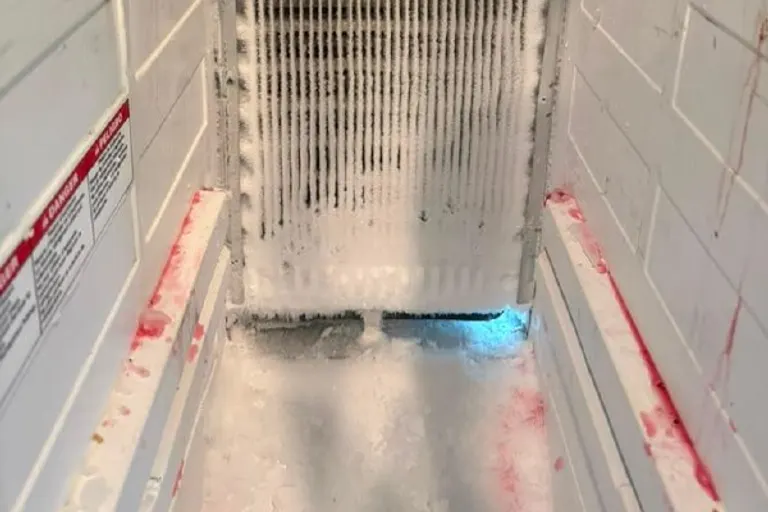
Freezer frost forms when moisture reaches a surface cold enough to freeze. A small amount can follow a door that was left ajar or frequent opening on a humid day. A dense white layer that returns after removal is different: it can restrict the air that carries cold through the compartment and may be evidence of a continuing fault.
The frost pattern matters more than a guessed part. Frost around the door opening suggests outside air may be entering. Frost near a vent can follow blocked airflow. A solid layer behind or across the freezer's interior rear panel can develop when the evaporator area is not defrosting normally. Those patterns guide diagnosis, but they do not prove which component failed.
Protect the food before troubleshooting
Use an appliance thermometer if one is available. The U.S. Food and Drug Administration recommends keeping the freezer at 0°F. If food is softening or the measured temperature is rising, move it to reliable cold storage rather than repeatedly opening the door to investigate.
Keep the door closed as much as possible and photograph the frost before changing anything. Note where it appears, whether the fan is audible, whether the door was recently left open, and whether packages are blocking vents. This information can be more useful to a technician than a completely thawed compartment with no record of the original pattern.
Common reasons a freezer develops heavy frost
The door did not close completely
A package, drawer, ice buildup, or misaligned shelf can keep the door slightly open. Warm humid air then enters and freezes. Check that food is below the shelf edges, bins are seated, and nothing contacts the door. Close it gently and confirm the gasket touches the cabinet all the way around.
The gasket is dirty, damaged, or distorted
Food residue can keep a gasket from sealing, while a tear or permanently deformed section can leave a gap. Clean only with the method in the owner's manual. Do not coat the seal with petroleum jelly or try to reshape it with a heat gun. If the gasket is loose or damaged, the model number is needed to identify the correct part and installation method.
Interior vents are blocked
Many freezers depend on clear passages to move air across shelves or between the freezer and fresh-food section. Boxes pressed against a vent can produce uneven temperatures and frost in one area. Follow the loading clearances in the manual and leave space around marked vents.
The evaporator fan is not moving air correctly
A fan can be obstructed by ice, worn, electrically faulty, or prevented from running by another control problem. A scraping sound may mean a blade is contacting ice. Do not remove the interior panel or reach toward the fan. Note the sound and stop the appliance if there is burning, sparking, or severe overheating.
The automatic defrost process is not completing
Frost-free appliances periodically warm the evaporator enough to remove normal frost, then route the water to a drain. A heater, sensor, wiring, control, or drainage problem can interrupt that process. Because several parts can create a similar frost pattern, replacing the most familiar part without electrical and temperature tests can waste money and leave the original fault unresolved.
Safe checks you can make without disassembly
- Confirm the control setting. Check that the temperature was not changed accidentally, and compare it with the owner's manual rather than selecting the coldest setting immediately.
- Inspect loading and vents. Reposition packages that prevent the door from closing or block visible airflow openings.
- Look at the gasket. Check for residue, tears, loose corners, and places where the seal does not contact the cabinet.
- Record the frost location. Photograph the door edge, ceiling, vent, rear panel, or drawer where the buildup is concentrated.
- Listen without reaching inside. Record clicking, scraping, or changes in fan noise. Do not hold a door switch or bypass a safety device unless the manufacturer specifically instructs the owner to do so.
If a recent open-door event clearly caused a light buildup and temperatures remain safe, the manual may provide an owner defrost procedure. Follow it exactly, protect the floor, and never accelerate thawing with sharp tools or high heat. If thick frost returns, schedule diagnosis.
Why simply removing the ice may not solve it
Thawing can temporarily restore airflow, which makes the appliance appear repaired. If a seal leak, fan issue, blocked drain, sensor fault, or defrost failure remains, frost will build again. The return time and location are useful clues: note whether it takes hours, days, or weeks and whether temperatures changed first.
A technician may verify door alignment and gasket contact, actual compartment temperatures, fan operation, airflow, defrost components, sensors, wiring, controls, and the drain path. The goal is to prove why frost formed before recommending a repair.
Freezer repair for Atascocita and the Lake Houston area
Quality Repairs serves homeowners in Atascocita, Humble, and Kingwood. For heavy frost, warming food, fan noise, leaking water, or buildup that returns after a manual-approved defrost, review our freezer repair service or request an appointment online.
The diagnostic visit is $79.99 and is credited toward an approved repair. Have the complete model number, temperature readings, frost photos, and the approximate time since the problem began ready when you call.