
Whether it is called a vent hood, range hood or kitchen exhaust hood, the appliance combines air movement, grease filtration, lighting and electrical controls in one system. A fan that will not start is different from a fan that runs but does not capture smoke, and neither complaint automatically proves a failed motor.
Common vent hood problems
- The fan does not start: the issue may involve incoming power, a control switch, electronic control, wiring, a capacitor on applicable models or the blower motor.
- Only one fan speed works: speed controls, switches, electronic controls, wiring or the motor circuit may need model-specific testing.
- The hood is noisy or vibrates: loose filters, debris, a damaged blower wheel, a mounting concern or motor wear can change the sound.
- Lights do not work: the cause may be the lamp or LED module, socket, driver, transformer, control or wiring—not always the bulb.
- Smoke and odors linger: clogged filters, a closed damper, restricted ducting, an incorrect fan setting or a capture problem may reduce effective airflow even when the blower runs.
- Controls are intermittent: heat, grease, moisture, loose connections or worn controls can create a problem that appears only at certain settings.
Safe checks a homeowner can make first
- Confirm whether the fan, lights or both have stopped working. That distinction helps narrow the circuit involved.
- Check the home breaker and any accessible GFCI protection once. If a breaker or GFCI trips again, stop and arrange diagnosis.
- With the hood switched off and cool, inspect that removable filters are seated correctly. Clean reusable filters only by the method in the manufacturer instructions; replace disposable filters rather than washing them.
- Test each normal fan speed and light setting. Note unusual sounds, odors, delay or flickering without removing panels.
- For a ducted hood, look only at safely accessible exterior termination points for an obvious closed flap or visible obstruction. Do not climb or reach into ductwork.
What a technician may diagnose
The diagnostic path should follow the reported symptom and the exact model. A technician may verify the supply and connections, inspect accessible controls, test the fan switch or user interface, evaluate motor and capacitor circuits where applicable, check the blower wheel, inspect lamp or LED circuits, and assess filters, damper movement and accessible airflow restrictions. Not every component is checked on every visit.
When the hood runs but ventilation is weak, appliance operation and duct performance have to be separated. A motor can run while a dirty filter, damaged blower wheel, blocked damper or restrictive duct path limits capture. Conversely, a clean filter does not prove that electrical controls and the blower are operating correctly.
Repair or replace?
A control, switch, lighting component or blower repair may be practical when the hood is structurally sound and parts remain available. Replacement may deserve consideration when the enclosure is badly damaged, the duct configuration is unsafe or unsuitable, multiple major assemblies have failed, or model-specific parts are no longer supported. Size, mounting, duct diameter, electrical requirements and the cooking appliance below must be evaluated before choosing a replacement.
A documented Viking vent hood visit
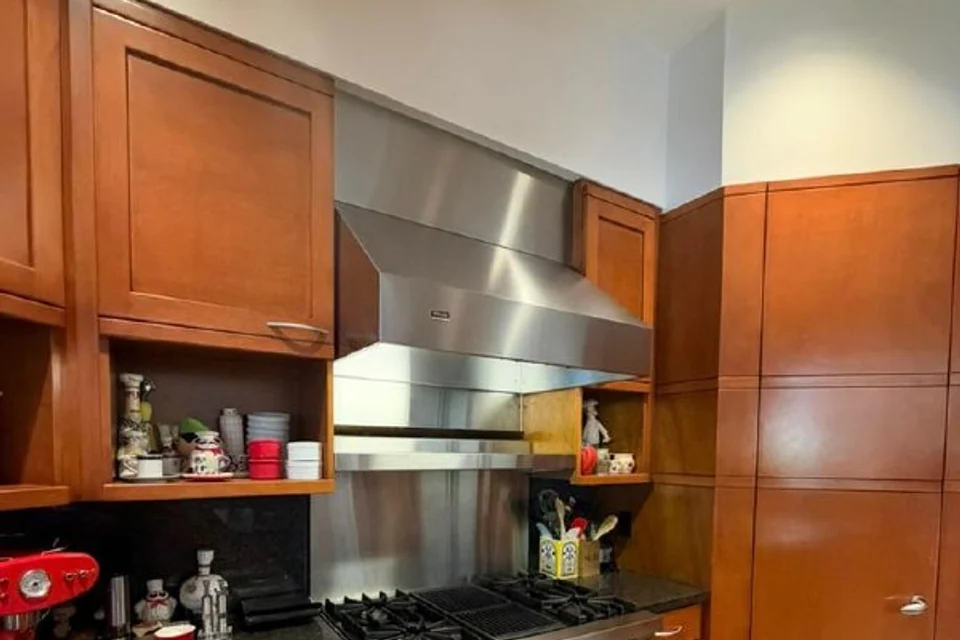
The photo on this page shows a residential Viking cooking installation documented during a Quality Repairs visit. It is used to illustrate the service environment—not to claim that every hood has the same controls or requires the same repair. The useful starting point is always the customer's symptom, the complete model number and the manufacturer's service information.
When to stop using the hood
Stop operation for a burning smell, smoke from the hood itself, sparking, melted wiring or controls, repeated breaker trips, a fan contacting metal, severe vibration, or a gas-cooking situation where smoke or combustion products are not clearing. For an active fire, leave the area and call emergency services.
Need vent hood service near Humble?
Quality Repairs evaluates residential appliance concerns in Humble and nearby Lake Houston communities. Vent hood models and parts support vary, so call (832) 242-9916 or text us with the brand, model number and main symptom so our team can confirm service availability before scheduling.
Before the visit
Keep the cooking area clear, avoid removing the hood from the wall or cabinet, and have the model number available if it can be reached without tools. A short video of an intermittent noise or control problem can also help, provided it can be recorded safely.