
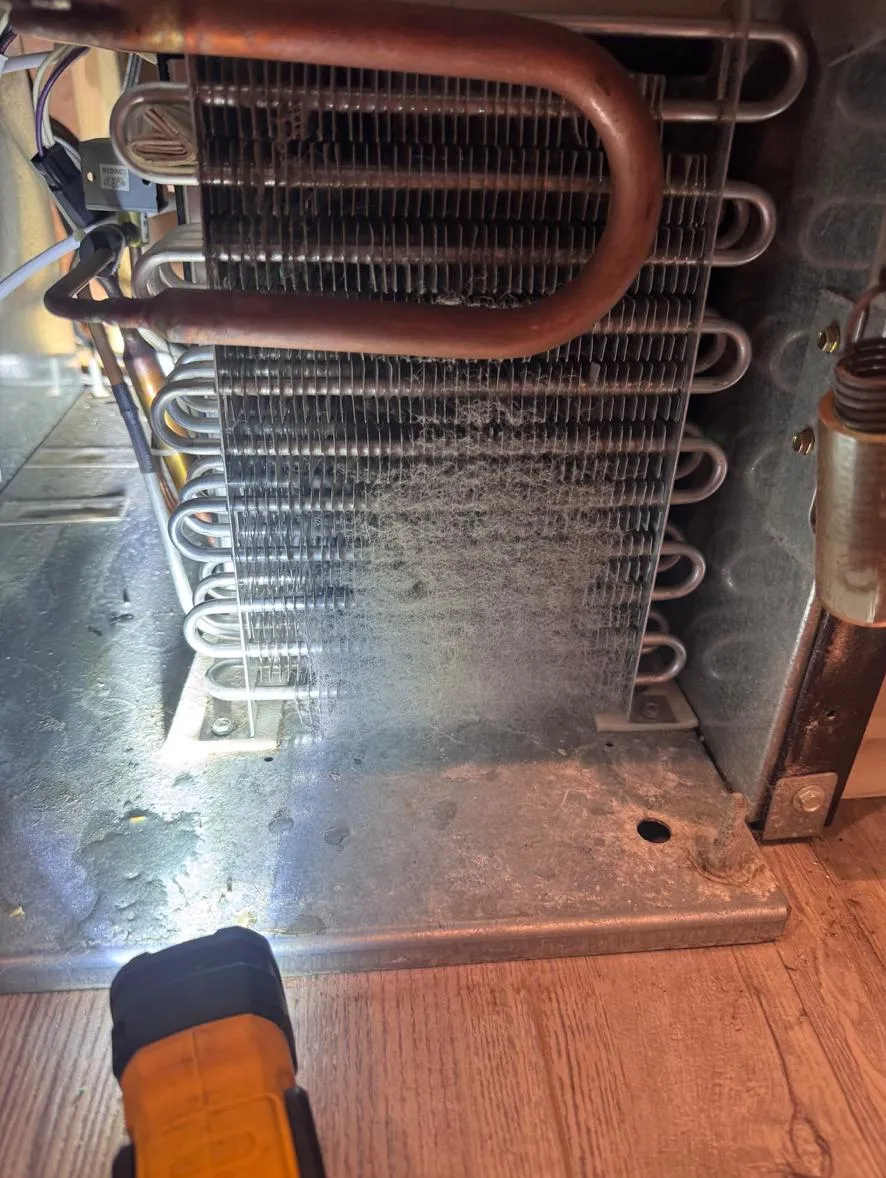
Condenser care can help a refrigerator release heat, but there is no single cleaning procedure for every model. Some refrigerators expose coils behind a removable toe grille or at the rear. Others use a covered condenser area that the owner should not open. ENERGY STAR specifically recommends reading the user manual to learn whether and how the coils can be cleaned safely.
The short answer is to locate the exact model's care instructions first. If they describe owner cleaning, switch the refrigerator off and unplug it, remove only the grille the manual identifies, loosen dry dust gently, and vacuum the debris. Do not remove service panels, bend tubing, reach near wiring, or use water or household cleaner in the mechanical compartment.
Why condenser airflow matters
A refrigerator moves heat from the food compartments to the room. The condenser and surrounding airflow help release that heat. Dust, pet hair and debris on an accessible condenser area can reduce airflow and make the system work harder. A blocked front or rear ventilation opening can have a similar effect even when the coil itself looks clean.
Dirty coils are only one possible cause of poor cooling, long run times or unusual warmth. Door-seal leaks, blocked interior vents, heavy frost, a condenser or evaporator fan problem, defrost faults, sensors, controls, room temperature and sealed-system conditions can create overlapping symptoms. Cleaning visible dust is maintenance, not proof of a diagnosis.
Check the manual before moving or opening anything
Find the model number in the refrigerator compartment or on the door frame, then locate the manufacturer's owner manual. Search the care section for "condenser," "coil," "ventilation" or "cleaning." Follow its location, access and tool instructions. If the manual says the condenser does not require routine owner cleaning, do not remove a panel just to look for it.
Before moving the appliance, check the floor, power cord, water line and shutoff valve. A refrigerator can damage flooring or pull a short water connection loose. Do not tilt it, force it away from the wall or keep pulling when a cord, line, anti-tip device or built-in trim limits movement. Built-in and tightly installed models should be handled by a qualified person.
A safe cleaning sequence for owner-accessible coils
1. Protect the food and work area
Plan a short cleaning session and keep the refrigerator and freezer doors closed. The FDA recommends keeping the refrigerator at or below 40°F and the freezer at 0°F. If temperatures are already rising or the appliance will be off for an extended period, move perishable food to reliable cold storage instead of relying on the cleaning process to restore cooling.
Clear loose items from the top of the refrigerator and protect the floor. Keep children and pets away from the work area. Gather only the tools allowed by the manual, usually a vacuum with a crevice attachment and a soft coil-cleaning brush.
2. Turn the appliance off and unplug it
Use the normal control to turn cooling off if the manual directs, then unplug the refrigerator from the wall outlet. Never clean around a fan or electrical connection while the appliance is energized. If the plug is inaccessible, damaged or heat-discolored, stop and arrange qualified service instead of reaching blindly or pulling the cord.
3. Open only the owner-accessible area
Remove a toe grille or rear access piece only when the manual specifically identifies it as part of owner maintenance. Use the stated release method and do not pry plastic tabs. A sealed metal cover, wiring barrier or fastened service panel is a boundary, not an invitation to continue disassembly.
4. Loosen dust gently and vacuum it
Vacuum loose debris first. Use the soft brush lightly in the direction that avoids crushing delicate fins, then vacuum again. Keep the nozzle and brush away from wires, fan blades, refrigerant tubing and connections. Do not use compressed air, which can drive debris deeper into the compartment, and do not spray water, degreaser or cleaner into the condenser area.
5. Reassemble and restore normal clearance
Reinstall the grille exactly as directed. Check that the cord and water line are not pinched and that the refrigerator has the manufacturer-required ventilation clearance. Plug it directly into its proper outlet, restore the normal cooling setting and close the doors. Cooling behavior changes gradually; do not repeatedly adjust the control while the temperatures stabilize.
How often should refrigerator coils be cleaned?
Use the manufacturer's interval rather than a universal calendar rule. ENERGY STAR's general advice focuses coil cleaning on older models and says to consult the user manual. Homes with shedding pets, renovation dust or a floor-level condenser intake may need inspection sooner when the manual permits it. Record the date so maintenance is based on the appliance's actual environment.
Between cleanings, keep approved ventilation openings clear and check that packages inside the refrigerator are not blocking air outlets. Clean door gaskets with the method specified by the manufacturer, and avoid overpacking the compartments so cold air can circulate.
What to check after cleaning
Listen for normal fan and compressor cycling, confirm the doors close completely and use an appliance thermometer to track temperatures. If the refrigerator remains above 40°F, runs continuously, makes a new scraping or rattling sound, develops heavy frost, leaks water or repeatedly trips the breaker, further cleaning is not the next step.
Start with the safe observations in our refrigerator not cooling guide. A professional evaluation may need to distinguish an airflow restriction from a fan, defrost, sensor, control or sealed-system problem. Quality Repairs provides refrigerator diagnosis and repair without assuming one symptom proves one failed part.
Local refrigerator help near Humble
Homeowners in Humble and other confirmed Lake Houston service areas can call (832) 242-9916 or request service online. The diagnostic visit is $79.99 and is credited toward an approved repair. Quality Repairs uses three-hour arrival windows and calls about 30 minutes before arrival.